How to Clean Air Conditioner the Right Way
If you want to know how to clean air conditioner systems properly, you are in the right place. I have cleaned hundreds of AC units over the years. Most cooling problems I see are caused by dirt. Not broken parts. Not bad compressors. Just dirt.
A clean AC runs colder. It uses less electricity. It lasts longer. It also keeps your indoor air healthier.
In this article, I will show you exactly how to clean air conditioner units step by step. I will cover window units, split AC systems, and central air conditioners. I will also explain coil cleaning, filter care, safety steps, and when you should call a professional.
Let’s start with the basics.
Why Cleaning Your Air Conditioner Is Important
Dust is the enemy of cooling systems.
When dirt builds up on coils and filters, airflow drops. Heat cannot transfer properly. Your system runs longer and harder. That means:
- Higher electric bills
- Weak airflow
- Uneven cooling
- Shorter system life
Dirty AC units can also grow mold and bacteria inside the drain pan and evaporator section. The Environmental Protection Agency Environmental Protection Agency explains that poor HVAC maintenance can reduce indoor air quality.
Regular AC maintenance protects both your wallet and your health.
How an Air Conditioner Works
Before you clean it, understand what it does.
An air conditioner removes heat from inside your home and pushes it outside.
There are four main parts:
- Evaporator coil inside the home
- Compressor
- Condenser coil outside
- Blower fan
The evaporator absorbs indoor heat. The refrigerant carries that heat to the outdoor condenser. The condenser releases the heat outside.
When coils get dirty, heat transfer slows down. That is why cleaning air conditioner coils is so important.
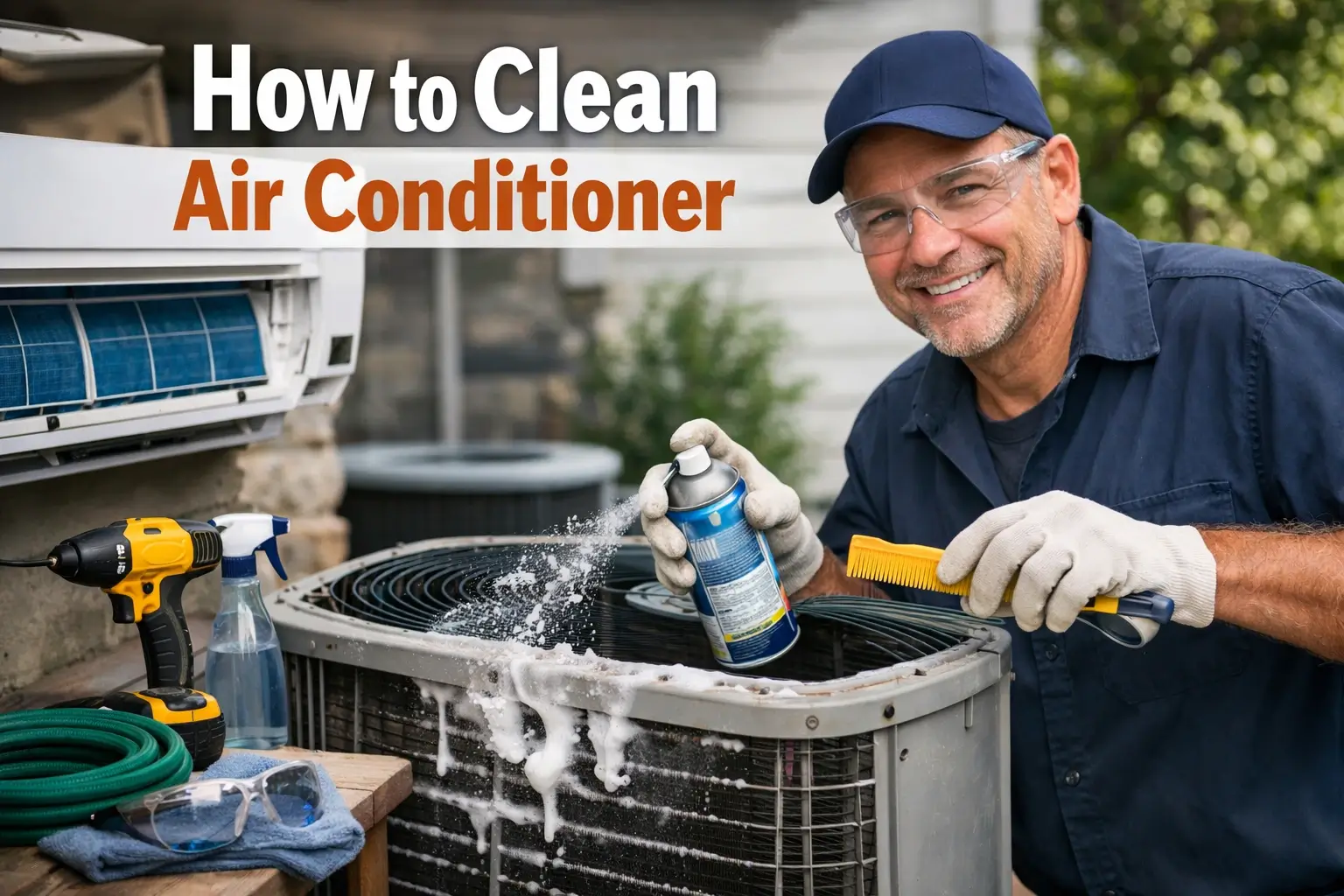
Tools You Need to Clean AC Unit
Gather these tools before you start:
- Screwdriver set
- Vacuum with brush attachment
- Soft nylon brush
- Fin comb
- Foaming coil cleaner
- Garden hose
- Bucket and mild dish soap
- Microfiber cloth
- Gloves
- Safety glasses
- Wet and dry vacuum
A fin comb is important. It straightens bent aluminum fins on condenser coils. Bent fins block airflow.
You can find coil cleaners at most hardware stores.
Safety Precautions Before You Start
Never skip safety.
- Turn off power at the breaker.
- Use gloves and eye protection.
- Never spray water near electrical connections.
- Do not handle refrigerant lines.
Refrigerant must only be handled by certified technicians under safety standards from the Occupational Safety and Health Administration Occupational Safety and Health Administration.
If you suspect a refrigerant leak, call a professional.
Step by Step: How to Clean Different AC Types
How to Clean a Window Air Conditioner
Window units collect a lot of dust.
Step 1: Disconnect Power
Unplug the unit completely.
Step 2: Remove Front Cover
Use a screwdriver if needed.
Step 3: Clean the Filter
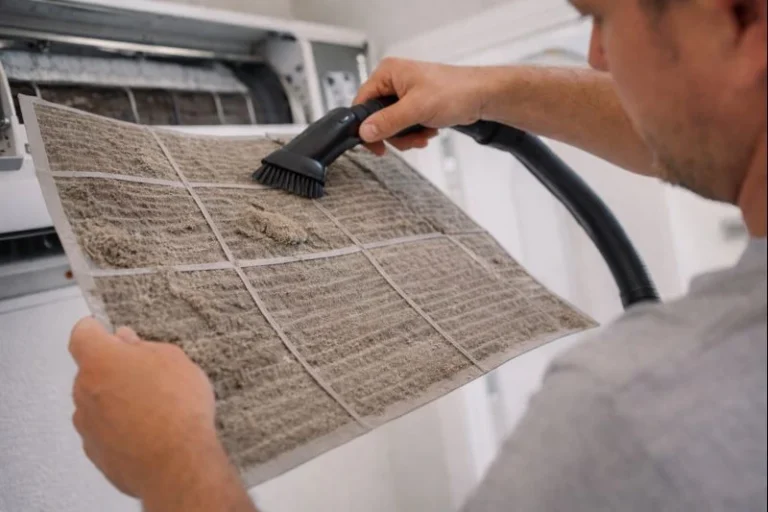
Vacuum it first. Then wash with warm soapy water. Let it dry fully.
Step 4: Clean Evaporator Coil
Use a soft brush to remove loose dirt. Apply a foaming coil cleaner. Let it work. Wipe gently.
Step 5: Clean Condenser Section
If possible, remove the unit carefully. Spray condenser fins lightly with a garden hose. Do not use high pressure.
Step 6: Straighten Bent Fins
Use a fin comb.
Reassemble once everything is completely dry.
How to Clean a Split AC
Split systems have indoor and outdoor units.
Indoor Unit Cleaning
- Turn off breaker.
- Open front panel.
- Remove filters and wash them.
- Vacuum inside housing carefully.
- Spray evaporator coil with no rinse coil cleaner.
- Clean drain pan and flush drain line with vinegar.
Drain line clogs are common. If water is leaking from the wall unit, the drain line is likely blocked.
Outdoor Condenser Unit Cleaning
- Turn off outdoor disconnect.
- Remove leaves and debris around unit.
- Remove top grille carefully.
- Vacuum condenser fins.
- Spray coil cleaner.
- Rinse gently from inside outward.
Keep at least two feet of clearance around the condenser unit.
How to Clean a Central Air Conditioner
Central AC systems are connected to ductwork and a furnace or air handler.
Step 1: Replace or Clean Air Filter
This is the most important step in AC maintenance.
Disposable filters should be replaced every one to three months.
Step 2: Clean Evaporator Coil
Access the coil panel near the furnace. Use foaming cleaner. Do not bend fins.
Step 3: Clean Drain Pan and Line
Use a wet vacuum to clear clogs. Pour a cup of vinegar to reduce mold growth.
Step 4: Clean Outdoor Condenser Unit
Same process as split AC condenser cleaning.
Major brands like Carrier, Trane, Lennox, Daikin, and LG all recommend annual cleaning in their maintenance manuals.
How to Clean Air Conditioner Coils Properly
This is where many homeowners go wrong.
Evaporator Coil
Use no rinse foaming cleaner. Do not soak electrical components. Let foam drain naturally.
Condenser Coil
Use condenser coil cleaner designed for outdoor units. Rinse gently with a hose. Never use a pressure washer.
Straighten fins using a fin comb after cleaning.
Clean coils improve energy efficiency. Programs like ENERGY STAR highlight how proper HVAC maintenance lowers energy use.
How to Clean Air Filter
Air filter cleaning is simple but critical.
- Check monthly during summer.
- Replace disposable filters every 30 to 90 days.
- Wash reusable filters and dry completely before reinstalling.
A dirty filter can cause frozen evaporator coils.
How Often Should You Clean Your AC
- Filter: every month inspection
- Coils: once per year
- Outdoor condenser: once per year
- Drain line: once per year
- Professional service: annually
If you live in dusty areas, clean more often.
Signs Your AC Needs Cleaning
- Weak airflow
- Bad smell from vents
- Ice on indoor coil
- Water leakage
- High electricity bill
- System runs constantly
If you notice these, cleaning should be your first step.
Common Mistakes to Avoid
- Spraying high pressure water on fins
- Ignoring bent fins
- Skipping breaker shutdown
- Using harsh chemicals
- Forgetting to dry filters fully
- Attempting refrigerant repairs
Cleaning is maintenance. Repairs require proper tools and licensing.
When to Call a Professional
Call a technician if:
- Compressor is not running
- Refrigerant leak suspected
- Electrical wiring looks damaged
- Mold growth is extensive
- Coils are severely clogged
Professional cleaning typically costs between 100 and 300 dollars depending on system type and location.
Deep coil cleaning may cost more.
Energy Efficiency Impact
Dirty coils increase energy use by up to 15 percent in many cases.
Clean condenser units release heat faster. Clean evaporator coils absorb heat better.
That means:
- Lower bills
- Less strain on compressor
- Longer system life
Indoor Air Quality Impact
A clean AC reduces:
- Dust circulation
- Mold spores
- Musty odors
The Environmental Protection Agency Environmental Protection Agency recommends proper HVAC maintenance for healthier indoor air.
Seasonal AC Maintenance Checklist
Spring
- Replace filter
- Clean outdoor condenser
- Test thermostat
Summer
- Inspect filter monthly
- Clear debris around unit
Fall
- Flush drain line
- Inspect insulation
Winter
- Keep outdoor unit clear
- Cover only if manufacturer allows breathable cover
Frequently Asked Questions
1. Can I clean my AC myself?
Yes, basic cleaning like filter replacement and condenser washing is safe if power is off.
2. How long does AC cleaning take?
Window units take about one hour. Central systems may take two hours.
3. Can I use bleach on coils?
No. Use proper coil cleaner. Bleach can damage metal.
4. Why is my AC freezing after cleaning?
Airflow may still be restricted or refrigerant may be low.
5. Is pressure washing safe for condenser units?
No. It bends fins and reduces airflow.
6. How do I know if my drain line is clogged?
Water leaks near indoor unit are common signs.
7. How often should professionals service AC?
Once per year minimum.
8. Does cleaning really reduce energy bills?
Yes. Clean systems run more efficiently and use less electricity.
Final Thoughts
Learning how to clean air conditioner systems is one of the smartest maintenance tasks you can do. It improves comfort, lowers bills, and extends system life.
Stay consistent with filter changes. Clean coils yearly. Keep the condenser clear.
If you ever feel unsure, call a licensed HVAC professional.
A clean AC is a reliable AC.