How to Clean an AC Filter: A DIY Guide for Slidell Homeowners
You’re in Slidell on a sticky summer day and your air conditioner isn’t cooling like it should. The air feels stale, bills are climbing, and sneezing fits are starting up again. Before calling a technician, there’s a simple fix: cleaning your AC air filter. A clean filter restores airflow, lowers energy use, and improves indoor air quality. In this step-by-step guide, your local HVAC expert will walk you through why and how to clean your AC filter, tools you’ll need, mistakes to avoid, and even seasonal Louisiana tips. By the end, you’ll know how to clean an AC filter properly and keep your home cool and healthy all year.
Why Should I Clean My AC Filter?
Cleaning your AC filter matters because it’s the first line of defense for your air conditioner and your health. The air filter traps dust, pollen, pet dander, and other particles from entering your ducts and home. When the filter is clogged, airflow is blocked, and your system must work harder to cool the air. This raises your electric bill and strains the AC. In fact, U.S. experts note that a clogged filter can make your AC use up to 15% more energy. For example, if your AC bill is $150 a month, that’s roughly $270 extra per year wasted on a dirty filter.
A dirty filter can also damage your AC unit. ENERGY STAR warns that “a dirty filter can increase energy costs and damage your equipment, leading to early failure”. Dust can bypass a clogged filter and settle on coils and blower parts, causing corrosion and breakdowns. From an indoor air quality standpoint, a saturated filter can even release trapped allergens back into your home, worsening allergies or asthma. So by keeping the filter clean, you help your AC run smoothly, lower your bills, and breathe easier. As Carrier’s maintenance guide puts it, a clean filter keeps your “system running smoothly and efficiently” and helps avoid unnecessary service calls.
How Often Should I Clean My AC Filter in Slidell?
Since Slidell’s climate is hot and humid much of the year, your AC runs long hours – and your filter clogs faster. Most experts recommend checking or cleaning filters monthly during cooling season. ENERGY STAR and the U.S. Department of Energy both say to inspect or clean your filter every month. If the filter is extremely dirty after one month, you may need to clean it more often.
In practice, aim to clean or replace your filter every 30 days if you run the AC daily or have pets or allergy concerns. If your filter is still mostly clean after a month, you might stretch it to 2–3 months. Remember that Louisiana’s spring pollen (February–April) and summer humidity can load filters quickly. During those peak months, check the filter even more often. Conversely, if your AC only runs lightly in cooler months, you might clean less often then.
Pro tip: Mark your calendar or set a phone reminder to check the filter at the first of each month. A quick look can tell you if it needs attention. Consistent maintenance is key – it keeps air flowing and prevents the filter from becoming a problem.
What Tools and Supplies Do I Need to Clean an AC Filter?
Gathering the right tools ahead of time makes filter cleaning easy. You’ll need:
- Screwdriver or nut driver. To open the filter compartment or grille on your HVAC unit (central AC) or wall unit.
- Vacuum cleaner with brush attachment. For dry dust removal. A shop vac is even better if you have one.
- Garden hose (for outdoor rinsing). A gentle spray to wash the filter with water. Avoid high-pressure spray to prevent damage.
- Bucket or large sink. To soak the filter if it doesn’t fit in a sink.
- White vinegar or mild detergent. A vinegar-water soak helps break down grime. Dish soap works too.
- Soft brush. A gentle bristle brush (like a paintbrush or old toothbrush) to loosen stubborn dirt.
- Rubber gloves and eye protection. To protect your skin and eyes from dust or cleaning solutions.
- Mask or particle mask. Optional, but helpful to avoid inhaling dust.
- Towel or drop cloth. To protect floors from drips while cleaning.
- Replacement filter on hand. Good to have in case the old filter is damaged and must be replaced.
These tools will cover most AC filter types and situations. You probably have many of them already at home. The vacuum and hose do most of the work. With everything ready, you’re set for a quick and safe cleaning job.
How Do I Turn Off My AC and Remove the Filter?
First step: cut the power to your AC unit. For safety and to keep dust from blowing around, always turn off the AC at the thermostat or breaker before removing the filter. If you have a dedicated AC disconnect switch (often near the indoor unit or outside), flip that off too. This ensures the blower is off while you work.
Next, locate the filter. In many central HVAC systems, the filter lives in the air handler cabinet (often in the attic, garage, or a closet). You may need to slide out a panel or unscrew a door to reach it. In window or wall units, the filter is usually just inside the front grille. Consult your owner’s manual if you can’t find it.
Once open, carefully remove the filter. Note which way the filter was facing (look for “airflow” arrows). Place the old filter on a towel or drop cloth – it will likely dump out loose dust and debris. Inspect it closely. If it’s torn or completely caked with dirt, it may need replacement instead of cleaning. Otherwise, get ready to clean it using vacuum or water as described below.
How Can I Vacuum a Dirty AC Filter?
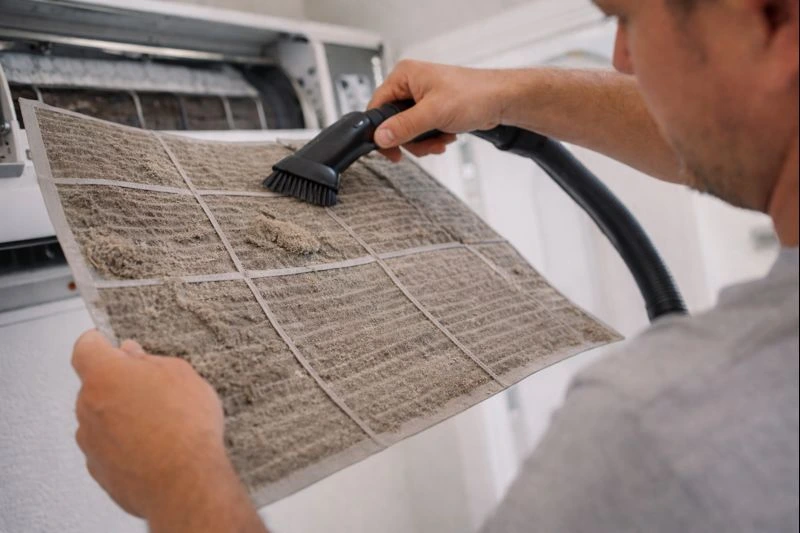
Use the vacuum first to knock loose all the dust and debris off the filter. This dry cleaning step is often enough if the filter isn’t too grimy. Attach the brush tool to your vacuum or use a handheld vacuum. Gently run the brush over both sides of the filter. If possible, vacuum on the clean-air side of the filter first, so dust gets pulled forward and out into the open rather than deeper into the filter material.
Be thorough but gentle: don’t press too hard or tear the filter. The goal is to remove surface dust and lint so that any remaining dirt can be washed away more easily. If the filter is only lightly dirty, vacuuming alone might suffice. But if it’s visibly dusty or sticky, you’ll need to wash it next.
Tip: This is a good time to also vacuum out dust from the filter housing or return-air grille. A quick brush or vacuum in the compartment itself can remove debris that might otherwise fall back on the filter.
How Do I Wash the AC Filter?
If your filter is washable (most electrostatic and foam filters, and some special pleated filters), follow these steps. (If it’s a disposable paper/fiberglass filter, skip washing – see the next section on replacing.)
Fill a sink, tub, or bucket with warm water and add about a cup of white vinegar (or a mild dish soap). Submerge the filter so it’s fully soaked. Let it sit for 15–30 minutes. The vinegar will help loosen oils and grime caught in the fibers. After soaking, gently agitate or brush the filter under water.
Next, remove the filter and rinse it thoroughly with a gentle garden hose spray or running tap water. Rinse from the clean side to the dirty side to flush out loosened debris. Do not use high pressure or harsh jets, as that can damage the filter material. Keep rinsing until the water runs clear of dirt.
If you see any black specks or mold on the filter, it’s safer to replace it. Cleaning may not remove mold completely, and a moldy filter can affect your health.
Once rinsed, shake off excess water and gently tap the filter against the side of the sink or bucket to dislodge trapped water.
How Should I Dry and Reinstall the Filter?
Air drying is crucial. Allow the filter to dry completely before reinstalling to prevent mold. Set it upright in a shady, ventilated area or lean it against a wall. In Slidell’s humid air, this may take a few hours. As a rule, let it dry at least 20–30 minutes (Home Depot suggests that minimum), but overnight is safest. You should not smell any dampness on it when it’s ready.
After it’s dry, reinstall the filter in the correct orientation (follow the airflow arrows). Carefully slide it back into the housing. Make sure it fits snugly and the panel or grille is secured. Finally, turn your AC power back on. Test the system – you should notice cooler airflow immediately if your filter cleaning was the issue.
As Carrier advises, once the cleaned filter is in place, “restore power to the system and turn it on”. Your AC should now run more quietly and efficiently.
Should I Clean or Replace the AC Filter?
Whether to clean or replace depends on the filter type and condition. Some filters are designed to be reused (cleaned), while others are disposable.
- Reusable (washable) filters – usually made of plastic or foam, sometimes metal mesh – are meant to be cleaned periodically. If yours is washable, you can vacuum and rinse it as described. Inspect it each time: if the filter material looks torn, discolored, or misshapen, it’s time for a new one.
- Electrostatic filters – some of these are washable, some are not. Check the label. If it says “washable,” then clean it; if not, replace it when dirty.
- Pleated filters (1-4 inch thick) – Most are made of paper or fiber and are disposable. You generally should not wash standard pleated filters. Home Depot cautions that “many disposable air conditioner filters should be replaced rather than cleaned, as cleaning with water can lead to possible mold issues”. For these, vacuuming may only temporarily help – usually you just replace them with a new filter.
- Fiberglass filters – thin blue or white flat filters – are definitely disposable and very low-cost. Replace these monthly or as needed. They trap only large debris and can’t be washed effectively.
- High-MERV and HEPA filters – thick filters used for high air quality – usually are replace-only. Some come in media cabinets and last 6–12 months.
In short, if your filter is labelled “washable,” you can clean it. If it’s a standard throwaway type (especially one that is over 1 inch thick and looks flimsy), just replace it. As Carrier notes, if a filter is “painfully obvious” in its dirtiness (dust falling off), replacing it is easier and safer. If it’s moderately dusty, vacuum or rinse it and then re-evaluate next month. When in doubt, follow the manufacturer’s guidelines for your specific filter.
Filter Types and Care
Filter Type | Washable? | Clean by | Replace Frequency* | Notes |
Fiberglass (flat) | No | N/A | Every 30 days (monthly) | Inexpensive, traps large dust only. |
Pleated (1″ or more) | Some | Vacuum (only) | 1–3 months | Many are disposable (not water-washable). |
Electrostatic (mesh) | Often yes | Vacuum + wash | Every 3–12 months | Check label: some are reusable. |
Foam / Metal mesh | Yes | Vacuum + wash | Every 3–6 months | Durable, reused for years if cleaned properly. |
HEPA/High-MERV media | No | N/A | Every 6–12 months (or per manufacturer) | Best for allergies; costly. |
* Replacement frequency is a guideline. Actual life depends on use, pollution, pets, etc._
What Common Mistakes Should I Avoid?
Cleaning an AC filter is straightforward, but watch out for these pitfalls:
- Not powering off the AC. This is the number one safety step. If you forget to shut off the system, the blower might turn on while your filter is half-out, blowing dust everywhere (and could even start unexpectedly). Always cut power first.
- Using too much pressure with water. A forceful spray or pressure washer will damage the filter. Stick to a gentle garden hose rinse.
- Washing a disposable filter. Never soak a one-time-use filter; it will fall apart and grow mold. If a disposable filter looks filthy, just replace it.
- Reinstalling a wet filter. Even a slightly damp filter can foster mold. Make sure it is completely dry (no cool mist coming off it) before putting it back.
- Forgetting to check filter direction. Many filters have arrows showing “airflow.” Install the cleaned (or new) filter in the same direction it was before. Putting it backward restricts airflow and can freeze up your coils.
- Skipping routine cleaning. If you only clean the filter once a year, you’re in for trouble. Make it a monthly habit. A little dust removal each month is better than a full clog later.
By avoiding these mistakes and cleaning carefully, you’ll keep your filter (and AC) in good shape. Remember, even for DIY tasks, following manufacturer advice is smart. If anything feels too dirty or complex (like moldy ducts or refrigerant issues), consider calling a pro.
How Does Slidell’s Climate Affect My AC Filter?
Living in Slidell means dealing with heavy humidity, pollen, and coastal conditions. Those factors make filter maintenance even more important:
- High humidity (rainy springs and muggy summers) encourages mold growth. A wet filter or a filter in a damp house can get mildew, so dry it thoroughly. High humidity also means the AC runs longer to keep you comfortable, so filters load up faster.
- Pollen and allergens: Slidell’s allergy season starts early (February) with tree pollen, then grass pollen spikes in late spring, and mold spores can even rise after summer storms. All that extra air stuff clogs filters. We recommend cleaning or replacing filters right after pollen season in spring and again after summer rains.
- Salty lake air: Salt isn’t usually filtered by the home air filter, but it can corrode outdoor coils and components. However, during storm season, dust stirred up by winds could gather more quickly. Keep a close eye on filter debris after big storms.
- Extended cooling season: Your AC might run from spring straight through fall. That means nearly year-round filter duty. Plan to clean filters before the hot weather hits (March/April), then again mid-summer, and after hurricane season when your AC restarts.
Local HVAC techs note that Slidell’s long, humid summers and high pollen counts “increase system stress and the risk of corrosion and mold” in AC units. In practice, that means filters get nastier quicker here than in drier climates. Cleaning regularly is not optional – it’s crucial. A routine check every month is a must, especially from April through October.
Troubleshooting Tip: Mold or Smell
If you ever catch a musty smell from the vents after cleaning, check for mold on the filter or in the system. It may mean an underlying moisture problem. Replace moldy filters immediately and consider having the coils or drip pan inspected. A common fix is adding a UV light or keeping drain lines clear to prevent mold growth. But the first defense is a clean, dry filter.
How Much Can I Save by Cleaning My AC Filter?
Think of cleaning a filter as a tiny investment that yields big returns. As noted, clogged filters force your AC to pump out up to 15% more power. In money terms, routine filter care could save you hundreds of dollars a year on utility bills.
For example, if your summer cooling costs $150 a month, a dirty filter could be wasting an extra ~$270 annually. Compare that to a pack of quality filters costing maybe $50–$100 per year. It really pays off to change or clean filters on schedule.
Beyond energy, keeping your filter clean prevents costly repairs. Ignoring filter cleaning shortens your AC’s life by years and can lead to premature failures (compressors, coils, etc.). One analysis showed that spending about $60 a year on filters can help avoid a potential $500 repair down the road.
In short, clean filters = lower bills + less breakdowns + healthier air. Not bad for a few minutes of work.
FAQs: Common Questions about Cleaning AC Filters
Q: How often should I clean or replace my AC filter?
A: Aim to check monthly. In most Louisiana homes, replace or clean disposable filters every 1–3 months. Wash washable filters at least monthly during heavy use. If you have pets or allergies, you may need to do it even more often.
Q: Can I just vacuum the filter instead of washing it?
A: Vacuuming is a good first step and removes loose dust. If the filter is only lightly dirty, vacuuming (plus blowing it out outdoors) might be enough. But if dust or grime is stuck on, you’ll need to rinse it with water or soak it.
Q: Can I clean any filter with water?
A: No. Only wash filters that are labeled “washable.” Many pleated and fiberglass filters are NOT meant to be wet. Water will degrade them. Always check the filter type. Disposable filters should be replaced, not washed.
Q: How long should the filter dry before I put it back?
A: Let it dry completely – generally a few hours up to overnight in Humid Louisiana. Even a bit of moisture can grow mold. Home Depot recommends at least 20–30 minutes before reinstalling, but you should feel no dampness.
Q: What if I see mold on my filter?
A: Moldy filters should be replaced, not cleaned. Mold can’t be fully removed and it will come back. If you spot mold, toss that filter and check your AC’s drain pan and coils for moisture issues.
Q: Are all filters the same size and rating?
A: No, filters come in various dimensions and MERV ratings. MERV measures how fine the filter is. Most homes do fine with MERV 8–13 filters. Higher MERV catches more particles but can restrict airflow if your fan isn’t strong. Always use the size stamped on your old filter or owner’s manual.
Q: How do I know when a filter is dirty?
A: Look at it. A filter that’s dark gray or brown with dust and fibers stuck on it is due for cleaning/replacement. Also watch for warning signs like weak airflow, uneven cooling, or a jump in your energy bill. These often mean the filter is clogged and restricting air.
Q: Can I reuse a disposable filter by vacuuming it?
A: It’s not recommended. Disposable filters trap particles in dense media. Once they’re dirty, vacuuming might not restore their capacity. For reliable performance, replace disposable filters on schedule. Only reusable filters are meant to be cleaned and reused.
Q: What if my AC still isn’t working well after cleaning the filter?
A: If airflow and cooling don’t improve, the problem might be elsewhere (like refrigerant, blower, or coils). Cleaning the filter is just one part of maintenance. If issues persist, it may be time to call a professional technician for a full tune-up.
Q: Is cleaning the outdoor AC coil as important as the filter?
A: Yes, but that’s a separate job. We recommend regularly checking and cleaning the outdoor condenser coil too, especially in dusty or leafy yards. A dirty coil can also reduce efficiency. However, coil cleaning usually requires special spray or a technician, whereas filter cleaning you can do at home.
Q: Can I use bleach or harsh chemicals on my filter?
A: No. Harsh cleaners can damage filter fibers and release harmful residue. Stick to plain water, mild soap, or white vinegar for washable filters. Harsh chemicals could eat away at foam or glue in pleated filters.
Q: What tools should I use for filter cleaning?
A: Keep it simple: vacuum with brush attachment, garden hose, soft brush, and water. You shouldn’t need any special tools beyond what was listed above. A gentle approach works best.
Q: When is the best time of year to clean filters?
A: The best practice is year-round: clean before you start heavy AC use in spring, then check monthly through summer/fall. In Slidell we’d say at least once after pollen season (March–April) and again at the end of summer (August–September). Also clean after big storms when your AC comes back on.
Conclusion
By now you know that keeping your AC filter clean is one of the simplest yet most effective HVAC tasks you can do. A sparkling filter means your AC blows harder, cools faster, and runs cheaper. It also keeps dust and allergens out of your home’s air – critical in Louisiana’s humid, pollen-prone climate. We covered why cleaning matters (energy savings, comfort, health), how often to do it, step-by-step how to clean or replace the filter, plus local Slidell tips and common pitfalls.
Next steps: Grab a new filter or cleaning gear and inspect your filter this weekend. Make it a habit each month during AC season. Mark your calendar now! If you find your filter is beyond saving, jot down the replacement size and grab a few spares. And if anything feels too tricky (or if your AC still struggles), call your local HVAC technician for help.
Happy cooling, Slidell! Your AC (and electric bill) will thank you for the extra TLC.